- Solve Step 7 of the Rosie pipeline: How PopVax and Stochastic Sciences turn the hardest bottleneck from our dog cancer vaccine guide into a repeatable 8-to-10-week contract service.
- Choose your intake path: How to submit raw tumor sequencing data or a pre-designed mRNA sequence from GATK, pVACtools, and AlphaFold 3.
-
Audit the wet-lab platform: Why PopVax’s clinical-stage
PVXL-150ionizable lipid formulation stays stable for over 9 months at standard 2 to 8 °C refrigerator temperatures. - Verify release quality control: The exact 12 analytical assays, Certificate of Analysis (CoA) documentation, and ~$300,000 USD unit economics for 100+ annual patient slots.
The Personalized mRNA Wet-Lab Wall Just Cracked
In March 2026, we published our Rosie dog cancer vaccine engineering guide examining how Sydney software engineer Paul Conyngham used open-source genomics tools and AlphaFold 3 to shrink his dog Rosie’s refractory sarcoma by 75 %. That analysis reached a sobering conclusion at Step 7 (The Hard Part – Manufacturing): any disciplined engineer can execute Steps 1 through 6 on a laptop, whereas capping mRNA and formulating lipid nanoparticles require a certified cleanroom. Conyngham crossed the finish line only because Professor Pall Thordarson at the University of New South Wales synthesized the mRNA construct inside an academic laboratory.
Outside narrow Phase 2 or Phase 3 pharmaceutical trials, human cancer
patients face an impenetrable manufacturing wall. Multinational
pharmaceutical companies universally reject single-patient custom
vaccine requests from individual tumor biopsies
("we don't do that here").
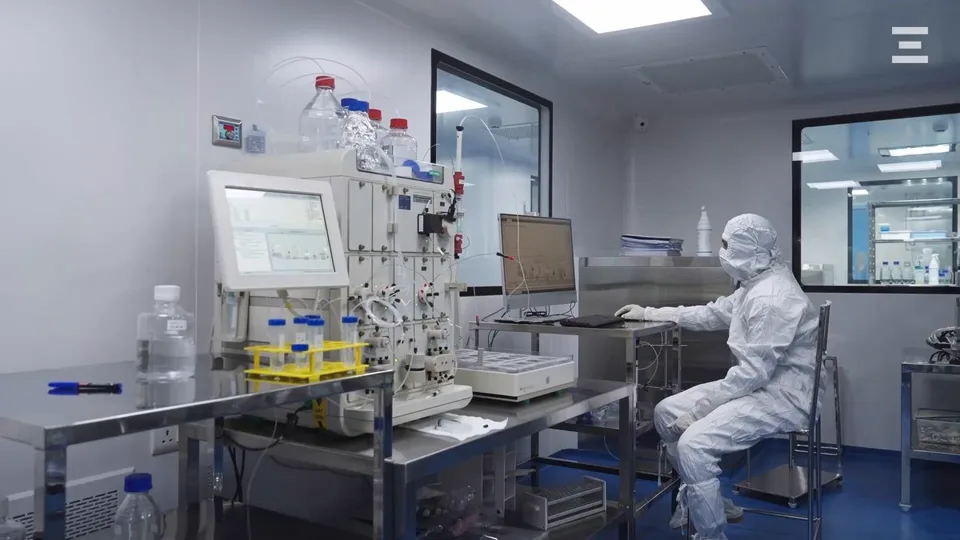
A contract personalized mRNA cancer vaccine foundry is an integrated computational design and Good Manufacturing Practice (GMP) cleanroom facility. It accepts individual patient tumor sequencing data or customer-designed mRNA constructs to manufacture custom, quality-controlled lipid nanoparticle (LNP) vaccine vials on a fixed multi-week turnaround for compassionate-use, expanded-access, or investigator-initiated clinical protocols.
On October 30, 2026, PopVax founder
Soham Sankaran (@sohamsankaran
on X) and Stochastic Sciences
launched RNAFoundry.com in
Hyderabad, India. Operating as the world’s first open-intake
contract personalized mRNA cancer vaccine foundry, RNA
Foundry publicly commits to manufacturing capacity for 100+
personalized cancer vaccines over the next 12 months,
delivering full-QC vials in 8 to 10 weeks from either
raw tumor sequencing data or a sequence you designed yourself.
Why Big Pharma Says “We Don’t Do That Here”
The clinical science behind personalized neoantigen
vaccinesPersonalized Neoantigen
mRNA VaccinesCustom mRNA therapeutics
encoding 10 to 34 patient-specific mutated tumor peptides (neoantigens)
identified by comparing tumor and healthy tissue sequencing. They train
CD8+ and CD4+ T-cells to destroy malignant cells while sparing healthy
tissue.NCI
Neoantigen Reference → is no longer speculative. In Phase
2b clinical trial results published in The Lancet, Moderna and
Merck’s personalized mRNA vaccine mRNA-4157 (V940) combined
with Keytruda cut melanoma recurrence or mortality by 49
% versus Keytruda monotherapy. Memorial Sloan Kettering and BioNTech
also published landmark
Nature results showing durable T-cell responses in resected
pancreatic ductal adenocarcinoma (PDAC).
Yet a patient diagnosed today with stage III or IV colorectal, hepatic, or sarcoma malignancy faces a structural lockout:
- Trial Eligibility Gates: Commercial Phase 2 and Phase 3 trials restrict enrollment to specific histologies, surgical stages, and geographic trial sites. Even if eligible, randomized control arms mean many participants receive standard-of-care monotherapy alone.
- CDMO Minimum Batch Economics: Traditional contract development and manufacturing organizations (CDMOs) are engineered for 10,000-to-1,000,000-vial commercial campaigns. Reconfiguring an ISO 7 cleanroom suite, analytical HPLC stack, and quality assurance team for a single-patient (“N-of-1”) batch disrupts their entire scheduling model.
- Closed Bioinformatics Silos: Major pharmaceutical sponsors lock their neoantigen prediction pipelines inside proprietary clinical workflows. They do not accept external FASTQ files or third-party mRNA sequences from a patient’s oncologist.
As RNA Foundry notes in its launch documentation, regulatory approvals across dozens of solid tumor types will arrive years too late for patients fighting aggressive disease today. Pioneering patients like GitLab co-founder Sid Sijbrandij proved that an individual could commission custom neoantigen therapeutics for osteosarcoma before founding Stochastic Sciences to advance personalized medicine. Partnering PopVax’s Hyderabad GMP manufacturing engine with Stochastic Sciences turns that bespoke path into a standardized industrial foundry.
Bridging the Rosie Pipeline: From Laptop Informatics to Hyderabad Cleanrooms
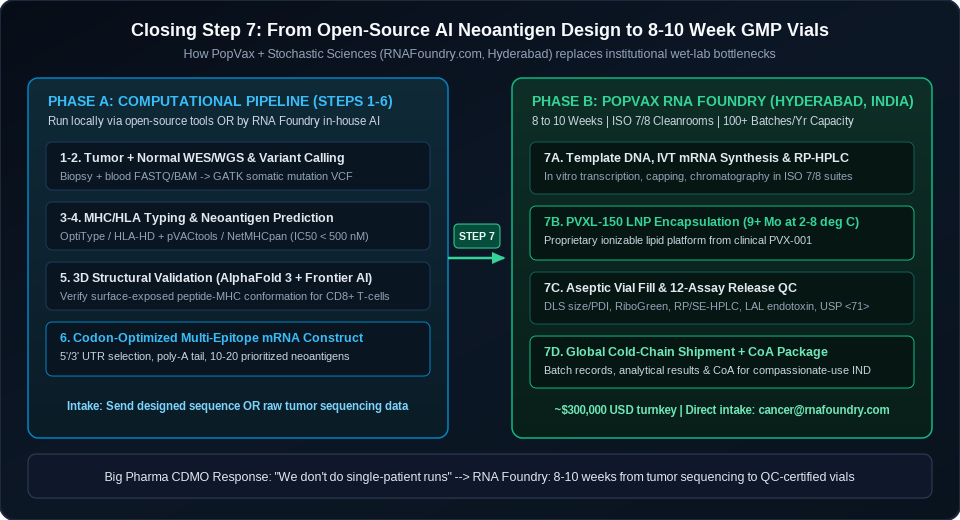
In our earlier guide on building Rosie’s dog cancer vaccine, we broke the personalized vaccine workflow into seven sequential engineering stages. Looking at that exact 7-step architecture alongside RNA Foundry’s intake model shows why this launch is a watershed moment for translational bioengineering.
Two Sanctioned Intake Modes at RNA Foundry
Unlike closed pharmaceutical pipelines, RNA Foundry’s working model exposes two distinct entry points depending on whether your oncology and bioinformatics team has already designed a construct:
- Mode A – Turnkey Sequencing-to-Vial (Foundry AI Pipeline): You submit your tumor biopsy and matched normal tissue sequencing data. RNA Foundry runs its in-house computational pipeline, combining frontier AI models with open-source MHC presentation and immunogenicity predictors, to rank somatic mutations and design the candidate neoantigen mRNA sequence.
- Mode B – Bring-Your-Own-Sequence (BYOS): If you or
a third-party computational biology team have already run Steps 1
through 6 (
GATKvariant calling,OptiType/HLA-HDtyping,pVACtools/NetMHCpanbinding prediction,AlphaFold 3surface-exposure filtering, and 5’/3’ UTR codon optimization), you send the completed mRNA sequence directly to RNA Foundry. Their engineers rapidly verify compatibility with their enzymatic synthesis and purification process and quote manufacturing to your required quality specification.
| Pipeline Stage | Open-Source / DIY Stack (Rosie Guide) | Legacy Big Pharma Trial
(mRNA-4157 / BNT122) |
PopVax + Stochastic RNA Foundry |
|---|---|---|---|
| 1. Tissue Sequencing | Commercial WES/WGS lab ($300 to $5,000) | Closed trial central biopsy lab | Patient/physician submits existing WES/WGS + RNA-seq data |
| 2-5. Neoantigen Selection | GATK + OptiType
+ pVACtools + AlphaFold 3 |
Proprietary closed sponsor pipeline | Dual mode: Foundry frontier AI + MHC tools OR customer BYOS |
| 6. Construct Optimization | Local LLM + codon/UTR optimization | Sponsor-only plasmid template | Validated against PopVax IVT template & UTR backbone |
| 7. GMP Synthesis & LNP | Blocked (requires cold-calling university labs) | Restricted to enrolled trial participants | Open contract foundry: ISO 7/8 cleanrooms in Hyderabad |
| Cold-Chain Storage | Ad-hoc academic ultra-cold (-80 °C) | -80 °C to -20 °C frozen logistics | 9+ months at 2 to 8 °C
(standard refrigerator via PVXL-150) |
| Release QC & Paperwork | Research-grade ad-hoc testing | Internal sponsor IND dossier | 12-assay QC battery + Certificate of Analysis (CoA) |
| End-to-End Turnaround | 3 to 6 months (if a lab partner says yes) | Unavailable outside trial cohorts | 8 to 10 weeks (100+ batches/year capacity) |
Inside the Hyderabad RNA Foundry and the PVXL-150 LNP Platform
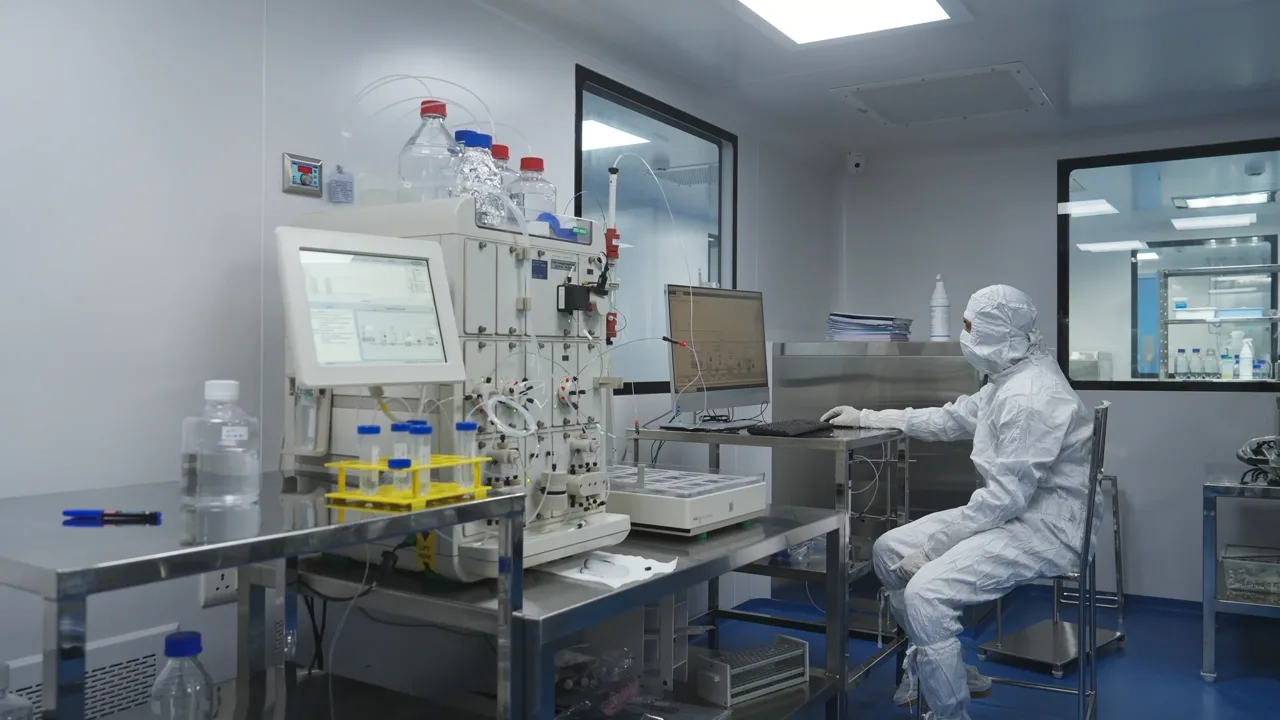
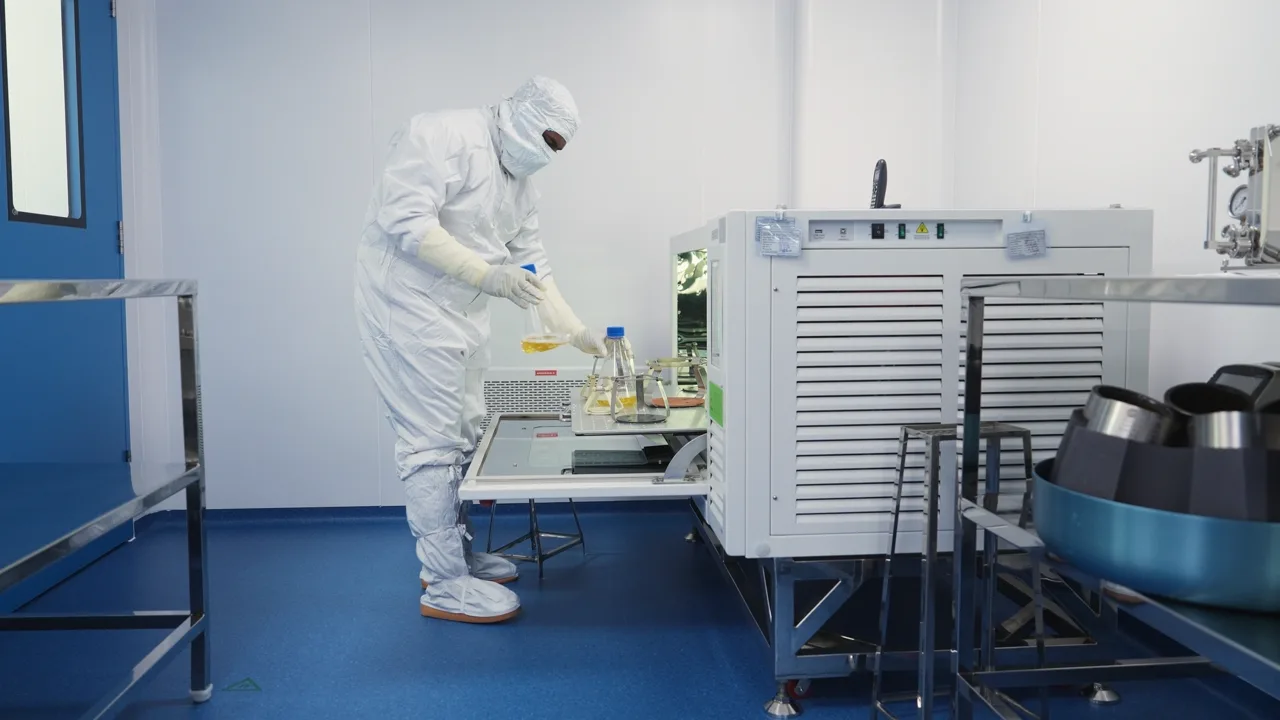
PopVax operates mature, clinical-grade biomanufacturing
infrastructure. Founded by computer scientist Soham Sankaran, PopVax has
received funding from the Gates Foundation,
Good Ventures, Vitalik Buterin, and
US BARDA. The company built the Hyderabad RNA Foundry
to advance its broadly protective COVID-19 vaccine candidate
(PVX-001) into human clinical trials in Australia.
Why
2 to 8 °C Refrigerator Stability (PVXL-150) Changes Global
Delivery
First-generation mRNA vaccines require ultra-cold freezer chains (-80 °C to -60 °C) because lipid nanoparticle shells and long mRNA strands degrade rapidly via hydrolysis and lipid oxidation. For a personalized cancer vaccine shipped across international borders to an oncology clinic or academic hospital, dry-ice and ultra-low-temperature freezer failures represent a severe operational risk.
PopVax encapsulates its personalized cancer constructs in its proprietary LNP formulation built around the PVXL-150 ionizable lipidPVXL-150 Ionizable Lipid FormulationPopVax’s proprietary lipid nanoparticle formulation validated in clinical candidate PVX-001. It maintains particle diameter (~75 nm), mRNA encapsulation efficiency (>90 %), and RNA integrity for over 9 months at standard 2 to 8 °C refrigerator temperatures while driving potent CD8+ T-cell responses.RNA Foundry Platform Data →. As documented on RNAFoundry.com and in PVX-001 preclinical studies:
- 9+ Months Refrigerator Stability: Vials stored at standard 2 to 8 °C refrigerator temperatures maintain consistent hydrodynamic particle size (~75 nm), low polydispersity index (PDI < 0.15), high encapsulation efficiency (>90 %), and intact mRNA purity across 90+ day accelerated and 9+ month real-time stability tracking.
- Potent CD8+ Cytotoxic T-Cell Induction: Unlike
prophylactic antibody vaccines that primarily need humoral B-cell
titers, therapeutic cancer vaccines live or die by their ability to
prime cytotoxic CD8+ T-cells that infiltrate solid
tumors. Preclinical evaluations of
PVXL-150confirmed robust CD8+ T-cell activation.
The 12-Assay Release Quality Control Battery
When an oncologist or institutional review board (IRB) evaluates a custom therapeutic for a compassionate-use or expanded-access INDExpanded Access / Single-Patient INDRegulatory pathways (such as FDA Form 3926 in the United States, TGA Special Access Scheme in Australia, or equivalent national named-patient programs) allowing physicians to administer investigational therapeutics to patients with serious or life-threatening diseases who lack satisfactory approved alternatives.FDA Expanded Access Overview → filing, uncharacterized research-grade reagents are unacceptable. Administering poorly purified mRNA or endotoxic lipid suspensions can trigger dangerous systemic cytokine release or anaphylaxis.
Before shipping any patient batch, RNA Foundry executes a 12-test analytical release battery and delivers the complete batch manufacturing records, analytical chromatograms, and a formal Certificate of Analysis (CoA):
| Quality Control Property | Analytical Measurement Method | Why It Matters for Clinical Safety & Efficacy |
|---|---|---|
| 1. RNA Identity | Next-Generation Sequencing (NGS) | Confirms the exact patient neoantigen codons and UTR sequence were transcribed without frameshifts. |
| 2. Appearance | Visual Inspection | Verifies uniform opalescent LNP suspension free of visible particulates or phase separation. |
| 3. Particle Size | Dynamic Light Scattering (DLS) | Ensures LNP hydrodynamic diameter stays in the optimal 60 to 100 nm lymph-node drainage window. |
| 4. Polydispersity Index (PDI) | Dynamic Light Scattering (DLS) | Confirms monodisperse nanoparticle uniformity rather than coalesced lipid droplets. |
| 5. Zeta Potential | Electrophoretic Light Scattering (ELS) | Verifies near-neutral surface charge at physiological pH to prevent non-specific vascular toxicity. |
| 6. pH | Potentiometry | Confirms buffer stability for both mRNA phosphodiester bond preservation and parenterally safe injection. |
| 7. mRNA Content | RiboGreen Fluorescence Assay | Quantifies exact microgram dosage of total RNA per vial for accurate clinical dosing. |
| 8. Encapsulation Efficiency | RiboGreen Fluorescence Assay | Measures the percentage of mRNA protected inside LNPs versus unencapsulated free RNA (>90 % target). |
| 9. mRNA Integrity | Reverse-Phase HPLC (RP-HPLC) | Separates full-length intact mRNA transcripts from truncated abortive or hydrolyzed fragments. |
| 10. mRNA Aggregates | Size-Exclusion HPLC (SE-HPLC) | Detects double-stranded RNA (dsRNA) or multimeric aggregates that trigger innate TLR/RIG-I inflammation. |
| 11. Osmolality | Freezing-Point Depression Osmometry | Ensures isotonic formulation compatibility with human tissue upon intramuscular or intradermal injection. |
| 12. Endotoxin & Sterility | Kinetic Chromogenic LAL + USP <71> Membrane Filtration | Guarantees absence of bacterial lipopolysaccharide pyrogens and viable microbial contamination. |
Step-by-Step: How to Engage RNA
Foundry ([email protected])
For patients and oncology teams facing refractory solid tumors or high recurrence risk, RNAFoundry.com outlines five concrete execution steps:
- Secure Matched Tumor and Normal Sequencing: Coordinate with your surgical oncologist or molecular pathology team to obtain Whole-Exome Sequencing (WES) or Whole-Genome Sequencing (WGS) of both the tumor tissue (biopsy or surgical resection block) and matched normal blood, ideally paired with tumor RNA-seq to verify which mutated genes are actively expressed.
- Choose Your Design Path (In-House AI vs. BYOS): Select either RNA Foundry’s computational biology team to predict neoantigens from raw sequencing files, or submit a candidate mRNA sequence built via open-source tools (Steps 2 through 6 in our Rosie pipeline guide).
- Align Your Clinical and Regulatory Partner: Because RNA Foundry operates as a contract research and manufacturing foundry, you need a licensed physician, clinical investigator, or hospital oncology team in your destination country to handle regulatory authorization (such as an Expanded Access IND or investigator-initiated study) and clinical administration.
- Submit Your Intake Package: Email
[email protected]with three specific items:- Full name and destination country for vial shipment.
- The exact cancer type and clinical stage.
- A concise summary of your available tumor and healthy tissue sequencing data (or your candidate mRNA sequence design).
- Budget and Timeline Planning: RNA Foundry states transparently that full end-to-end projects currently cost around $300,000 USD and require 8 to 10 weeks depending on cleanroom slot availability across their initial 100+ annual batch commitment.
Honest Perspective on the $300,000 Price Anchor
At $300,000 USD, custom GMP synthesis remains beyond typical out-of-pocket household budgets. It is not yet a $1,000 commodity prescription.
Why is it still a massive breakthrough? Because before October 30, 2026, no commercial price existed at which an independent patient, philanthropic foundation, or academic oncologist could order a GMP-grade personalized mRNA-LNP cancer vaccine batch in 8 weeks. Even billionaires and biotech founders spent a year coordinating four or five separate contract labs across sequencing, epitope prediction, plasmid DNA, IVT mRNA, and LNP fill-finish while hoping the patient survived the handoffs.
Collapsing that entire chain under one roof in Hyderabad converts an impossible institutional favor into a repeatable industrial product with 100+ annual slots. Just as whole-genome sequencing dropped from $10,000,000 to under $500 as foundry throughput scaled, vertical integration in Hyderabad will drive N-of-1 mRNA manufacturing costs down over the coming years.
Sources & Primary References
- RNA Foundry Official Portal (PopVax + Stochastic
Sciences): https://rnafoundry.com – Platform
specifications,
PVXL-1504 °C stability plots, 12-assay QC table, 100+ annual capacity commitment, and$300,000/ 8-to-10-week quote intake. - Soham Sankaran Launch Announcement (October 30, 2026): https://x.com/sohamsankaran/status/2116185712995467458 – Video tour and public launch of RNAFoundry.com.
- PopVax Clinical Pipeline & PVX-001 Preclinical Data: https://popvax.com/vaccines/preclinical/pvx-001/ – CD8+ T-cell immunogenicity and LNP thermostability documentation.
- Companion Bioinformatics Guide (Gerry Burde): Rosie Canine
Neoantigen mRNA Pipeline Guide – Step-by-step walkthrough of
WES/WGS,
GATK,OptiType,pVACtools, andAlphaFold 3. - Moderna & Merck Phase 2b Melanoma Trial (KEYNOTE-942 /
V940): The
Lancet (2023) – Individualised neoantigen therapy
mRNA-4157(V940) plus pembrolizumab versus pembrolizumab monotherapy. - Memorial Sloan Kettering & BioNTech Pancreatic Cancer Trial: Nature (2023) – Personalized RNA neoantigen vaccines stimulate T-cells in pancreatic cancer.
- Sid Sijbrandij Personalized Oncology Case Study: Century of Biology – Sid Sijbrandij – Commissioning bespoke cancer therapeutics and founding Stochastic Sciences.